
Welcome to the Fulbright Spotlight
Donna Pearson, Ph.D
Fulbright U.S. Teaching Excellence and Achievement Program (2025); Fulbright U.S. Visiting Scholar Host (2025-2026)
The Joys of Hosting a Fulbright Scholar
If asked what some of the memorable moments are in hosting a Fulbright Scholar, I would have to say, “There were many and plenty wonderful moments of laughter and discovery during this visit.”
From the very beginning when receiving the acceptance notification, I was most happy to have this opportunity and spend 10 months learning how better to culturally communicate.
As host, several highlights included gaining an understanding of ‘language in language’. One fun moment was when I asked if we could have a green salad with dinner one evening. The Fulbright Scholar was Tajik and her family loved salads. We all thought this was a great idea. When I got to the table, I looked for a “green salad” only to find tomatoes in a side dish, spinach with olive oil and walnuts in another dish, and cucumbers in an additional dish. I quickly realized my thoughts about a US green salad were not a Tajik green salad. It was my pleasure to totally enjoy the deconstructed green salad which is very common for all salads. There were many more enjoyable meals where I was the learner and enjoyed understanding that common foods might be prepared and/or composed differently, but all came with great tastes. There were many more Tajik salads shared and enjoyed, and a traditional green salad found in most restaurants was not a “fan favorite” of the Tajik family.
Another learning opportunity we shared came in recognizing that communication does not mean interpretations are the same. While words can be similar or different, we tend to apply understanding through our individual culture and common experiences. This learning experience is certainly a great way to create bridges because I and my Tajik Scholar would occasionally come across as unclear not realizing we needed to have additional explanations in making sure there was clarity in our expectations.
When I can increase my cultural competency, this is one of the best learning moments in my experience with others. These are opportunities for concise communication with inquiries, and certainly more celebrations of getting to know others, even when we think we know a friend or colleague. It is important to remember; there is often more we may not know about someone from a different culture than what we think we know about a particular culture. Opening ourselves to serve as a host can result in developing a greater cultural respect of others while emphasizing our humanity through our similarities in this life.
If given the opportunity, I encourage others to serve as a Fulbright host. Personally, and professionally, your growth is guaranteed and the experiences you share with the Fulbright Scholar will influence their life and career.
Paul Sum
Fulbright U.S. Specialist to Romania (2024-2027)
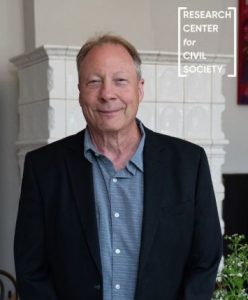
Department Chair of Political Science at the University of North Dakota & Morrison Fellow
Fulbright Spotlight: Paul Sum
Project Summary:
For his Fulbright project, he worked with the Research Center for Civil Society (RCfCV) at Babeș-Bolyai University to strengthen how NGOs use data to address social challenges. He helped the center expand its outreach to civil society organizations, showing them how academic researchers can support practical needs such as program evaluations, policy analysis, and donor profiling. At the same time, he demonstrated to faculty how partnering with NGOs can also produce meaningful academic research, helping bridge the gap between scholarly work and the everyday needs of civil society. This is an ongoing project where he has already made solid progress.
Hitting the Ground Running
Connecting with Communities and NGOs
Right from the start, he traveled to rural and regional communities in Remetea and Făgăraș, where he met local and regional NGO leaders and observed their work firsthand. He attended the Bike‑a‑thon fundraising event, toured the Transylvanian Research Center, and learned how these organizations mobilize local communities. During this visit, he delivered a keynote talk on how universities, local government, and nonprofits can collaborate to meet community needs—drawing on examples from his work in Grand Forks, ND. What was scheduled as a two‑hour roundtable turned into a lively four‑and‑a‑half‑hour discussion.
Academic Collaboration at Babeș-Bolyai University
Back on campus in Cluj, he met with university leadership (including the Dean, department chairs, faculty, and students) to help strengthen the institution’s research focus on civil society. He delivered a lecture on macro‑ and micro‑level civil society research and demonstrated how projects with NGOs can also produce strong academic publications. He collaborated with faculty on emerging research projects, including a study on youth volunteering and work examining the shrinking space for civil society. Throughout these meetings, he helped faculty and students understand how their academic pursuits could more directly support and illuminate the work of NGOs.
Strengthening NGO Capacity
Beyond the university, he worked closely with NGO leaders across the region. Following the Făgăraș events, he met with executives from organizations such as the Association for Community Relations (ARC), which hosted a roundtable to explore how academic tools can strengthen NGO operations. He provided practical guidance on donor prospect ratings (an analytical method used to identify and organize potential supporters) and shared concrete examples from his own research to help NGOs refine their fundraising and strategy development.
Bucharest Engagement and Project Wrap‑Up
His project culminated in Bucharest, where he delivered a keynote address to national NGO leaders and met with the Fulbright Commission to share the project’s outcomes. These conversations helped lay the groundwork for ongoing collaboration between U.S. and Romanian partners.
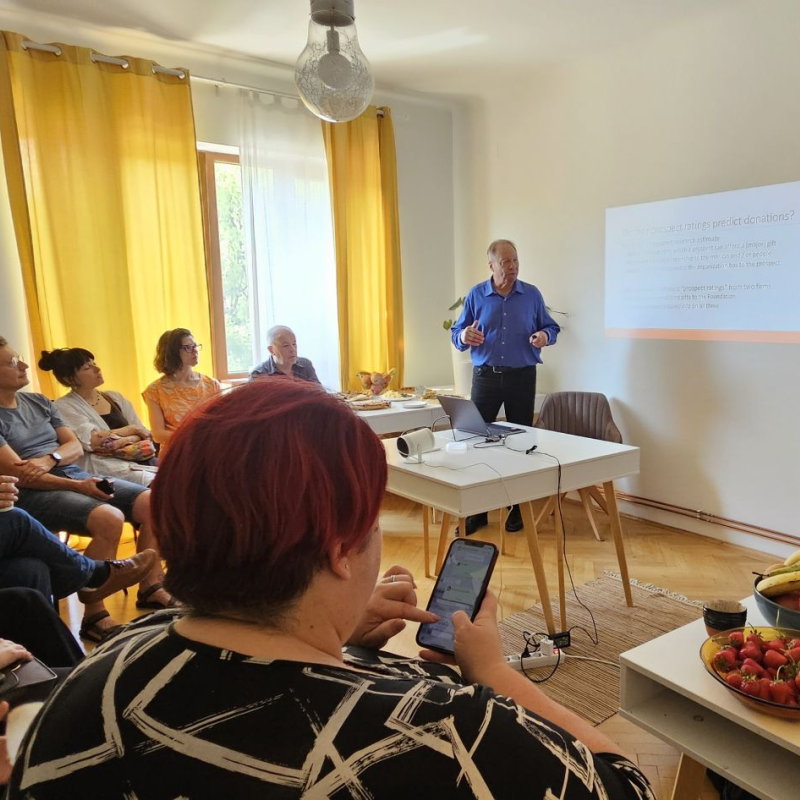
Talking with NGO leaders in Cluj-Napoca
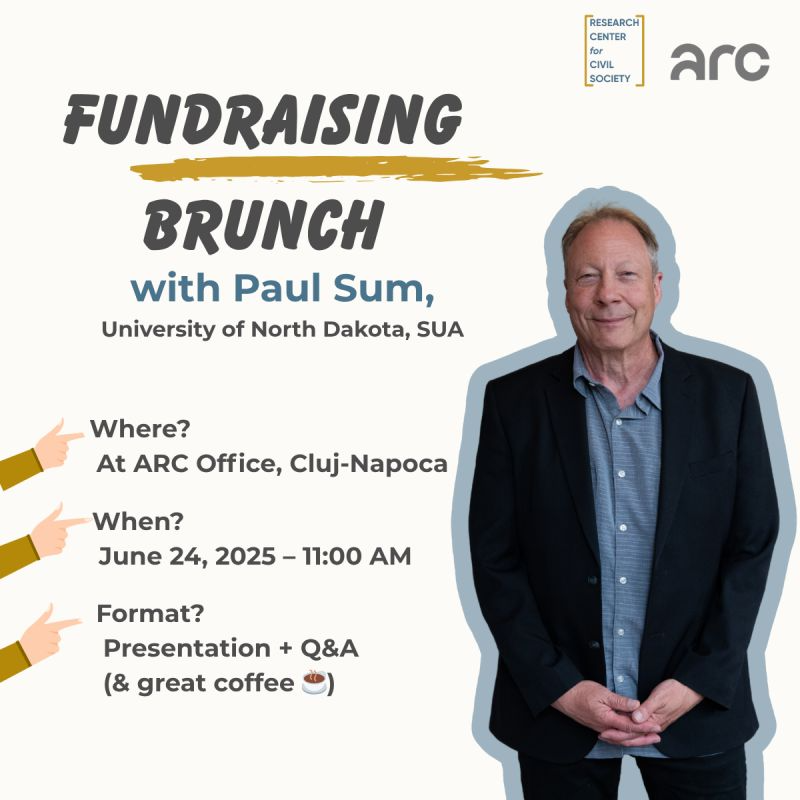
Promotional flyer for another talk in Cluj on fundraising and the use of data analytics
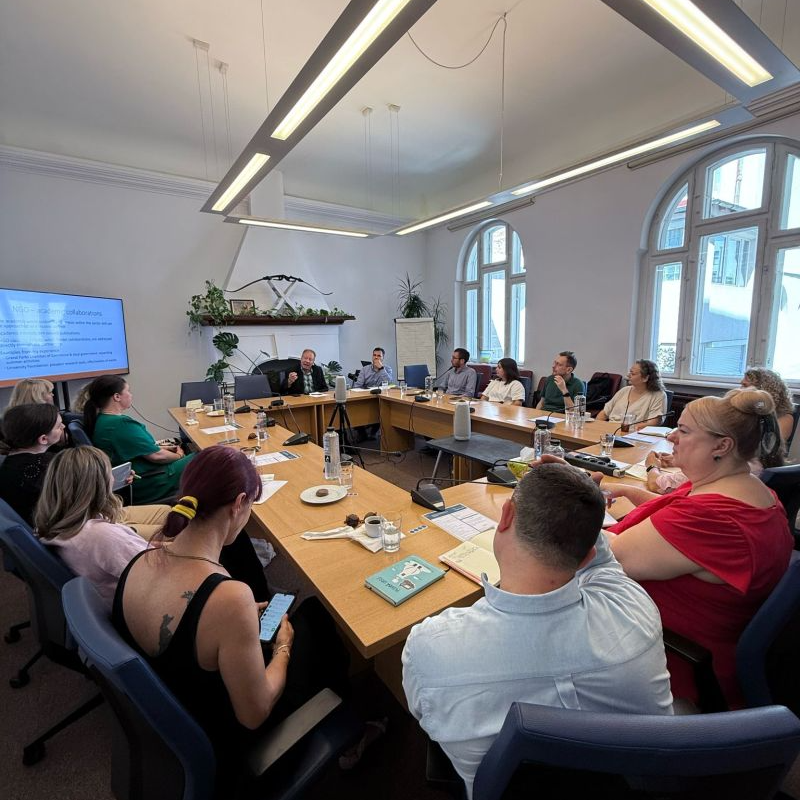
Giving a talk in Bucharest
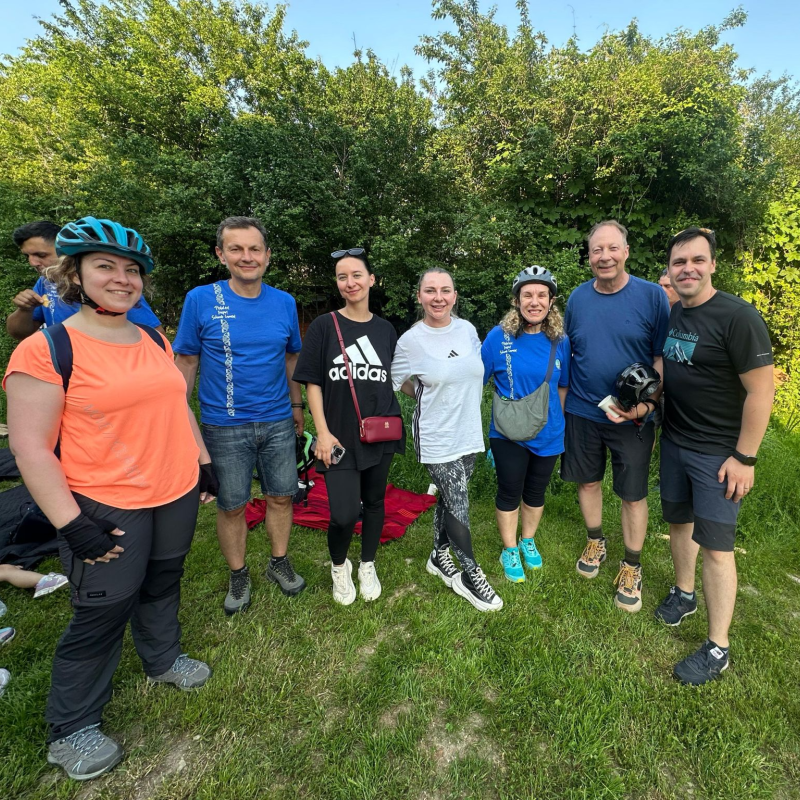
With the team after the Bike-a-thon (15k through mountainous terrain!)
0 Comments